



About UsPricingReviewsContact UsClient Portal loginBook a Free 30-Min Call
Last updated: October 18, 2026
If you want hands-off, CRA-ready reporting, a flat-rate Canadian remote accounting service is your best option. If you want direct control at a low monthly cost, choose a cloud accounting platform and pair it with a CPA for year-end filings.
Here is the quick breakdown:
QuickBooks Online (Canada): Best for owners who want deep reporting, and have inventory to manage, built-in payroll options, and strong accountant familiarity. Monthly plans start at competitive entry-level prices (promotional pricing applies).
Xero (Canada): Best for cloud-first businesses that need unlimited users, a large app ecosystem, and clean bank reconciliation with no to very little inventory management. Plans run at varying monthly prices suitable for small business budgets.
T-Ledgers (flat-rate remote service): Best for owners who want CPA oversight, GST/HST filing, payroll, and year-end tax returns handled for them, with no hourly surprises.
A part-time bookkeeper typically costs $300–$800 per month, which is significantly more than software alone ($20–$70/month). The gap closes quickly once you factor in CPA year-end fees for a corporation ($2,500–$5,000+). Quick verdict: software works well for simple operations; a flat-rate service pays for itself when your books have any real complexity.
How do QuickBooks and Xero compare for Canadian small businesses?
What do QuickBooks and Xero actually deliver for Canadian businesses?
Bookkeeping software is not the same as professional accounting
How do you choose between software, hybrid, and a remote service?
What does a flat-rate remote accounting service actually include?
T-Ledgers handles the accounting so you can focus on your business
| Dimension | QuickBooks Online | Xero | Flat-rate remote service (T-Ledgers) |
|---|---|---|---|
| Best for | Small to mid-size businesses needing deep reporting with inventory management needs. | Cloud-first businesses, unlimited users, for solopreneurs and freelancers with no or little inventory management and reporting needs. | Owners wanting full CPA oversight |
| Pricing (CAD) | $20–$70/month (typical software range; promotional pricing may apply) | $20–$70/month (typical software range; plan choice required) | $300–$800/month (flat-rate remote service, includes CPA review and filings) |
| CRA / GST-HST support | Built-in GST/HST tracking | Built-in GST/HST tracking | CPA-prepared, CRA-ready filings |
| Payroll | QuickBooks has a payroll module as an add-on | Need 3rd party add-on | Included in service packages |
| Bank feeds & integrations | Stripe, Square, major banks | Stripe, Square, 1,000+ app marketplace | Works with your existing platform |
| Ease of use | Moderate learning curve | easier than quickbooks; cleaner interface | Fully managed — no learning curve |
| Support | Phone, live chat, help articles | Online only; no direct phone | Dedicated CPA team |
| What stays manual | T2/T2125 filing, tax strategy | T2/T2125 filing, tax strategy | Nothing — all included |

Aggregated user reviews show close satisfaction scores for both platforms, with QuickBooks rated higher for reporting depth and Xero for ease of bank reconciliation.
Pro Tip: Pairing either software platform with a CPA for quarterly reviews can cut year-end cleanup costs significantly. Software captures transactions; a CPA catches the errors before they become CRA problems.

Both platforms cover the core tasks: invoicing, expense tracking, bank reconciliation, and financial reporting. Where they diverge is in depth and workflow fit.
QuickBooks Online offers stronger built-in reporting and budgeting tools. Inventory management is available on Plus and Advanced plans. Its accountant network in Canada is well-established, which matters when you need a CPA to review your file. Payroll is an add-on, and cash flow forecasting is reserved for the Advanced tier.
Xero takes a different approach. Its app marketplace exceeds 1,000 integrations, making it flexible for businesses with specific workflow tools. Bank reconciliation is clean and fast. Unlimited users on every plan is a genuine advantage for businesses with multiple staff or external accountants. The Starter plan does cap invoices and bills, which catches some new users off guard. The inventory management is not as strong as QuickBooks though.
For Canadian-specific needs, both platforms handle GST/HST set-up and track source deductions. Neither files directly with the CRA — that step still requires a CPA or a filing service. T4 and T4A flows typically need a payroll add-on or a separate payroll provider.
Stripe and Square both integrate with QuickBooks and Xero, making them practical for PEI retailers and e-commerce merchants. For a deeper look at payment processor differences, the choice between them affects how transactions flow into your books.
Bank feeds from major Canadian banks work on both platforms, though connection stability varies by institution.
Non-accountants typically need two to four weeks to set up either platform correctly, configure tax codes, and connect bank feeds before the data is reliable.
Software records what happened. A CPA decides what it means for your taxes. That distinction matters most at year-end, when T2 corporate returns or T2125 self-employment schedules require judgement calls that no software makes automatically.
The most common failure point is mixed personal and business expenses. The CRA requires records kept for six years, and a single year of mixed transactions can trigger a costly audit or cleanup engagement.
Pro Tip: Open a dedicated business chequing account and a business credit card before you record a single transaction. This one step eliminates the most common cause of expensive year-end cleanups and audit flags.
Professional review also recovers money. In one documented case, a professional review of an e-commerce business’s records recovered $12,000 in missed input tax credits — a net gain after all professional fees. ITCs on GST/HST paid for business expenses are easy to miss when you are managing your own books.
Escalate to a CPA when your business has a corporate structure, runs payroll for multiple employees, carries significant inventory, or has large ITC opportunities. For DIY bookkeeping vs professional services, the break-even point arrives sooner than most owners expect.
The single most important criterion is honest: how much time do you have, and what is the cost of a CRA error in your business?
Ask yourself these questions before deciding:
Do you have more than five employees or complex payroll deductions?
Are you incorporated? (T2 returns require CPA preparation in most cases.)
Do you claim GST/HST ITCs regularly and in significant amounts?
Have your books been unreconciled for more than three months?
Do you have the time to learn and maintain accounting software correctly?
Questions to ask any prospective provider:
What is included in the flat-rate scope, and what triggers an extra charge?
Does a licensed CPA review and sign off on filings?
How is client data stored and protected?
What is your experience with CRA audits and correspondence?
What is the onboarding timeline and what do you need from me upfront?
Red flags to watch for: hourly billing with no cap, no CPA oversight on tax filings, vague deliverables, and no clear data security policy.
Software trials typically take two to four weeks to configure correctly. Remote services usually include a defined cleanup window of two to six weeks before the monthly cadence begins.
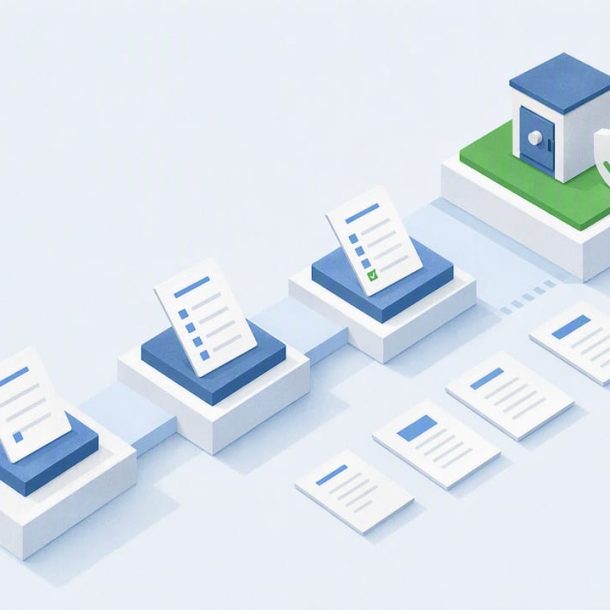
A flat-rate remote accounting package delivers ongoing bookkeeping, periodic CPA reviews, and year-end tax filings for a single predictable monthly fee. Here is what the process looks like with T-Ledgers:
Discovery call: Discuss your business structure, volume, and current state of records.
Data handover: Share access to your bank feeds, existing software, and prior-year returns.
Cleanup window: Reconcile historical transactions and correct categorisation errors (typically two to six weeks).
Monthly bookkeeping: Ongoing transaction categorisation, bank reconciliation, and GST/HST tracking.
Quarterly CPA review: A licensed CPA reviews the books, flags issues, and advises on tax planning.
Year-end filing: T2 corporate return or T2125 preparation, GST/HST annual filing, and T4/T4A slips if applicable.
T-Ledgers’ bookkeeping packages are structured as flat monthly fees with no hourly billing. Response time SLAs and deliverable schedules are defined upfront. For businesses that need higher-level advisory work, virtual CFO services layer cash flow forecasting and strategic planning on top of the core package.
Pro Tip: Before your first call with any remote accounting provider, gather your last two years of bank statements, your most recent tax return, and any outstanding CRA correspondence. This cuts onboarding time in half.
Security controls to require from any provider: encrypted file transfer, two-factor authentication on shared portals, and a clear data retention and deletion policy.
| Business profile | Main risk | Recommended route | Rationale |
|---|---|---|---|
| Freelancer / sole proprietor, simple income | T2125 errors | Software + CPA at year-end | Low volume; software handles daily tracking |
| Incorporated retail store | GST/HST and T2 complexity | Flat-rate remote service | CPA oversight needed for corporate filing |
| E-commerce with inventory | Missed ITCs, COGS tracking | Flat-rate remote service | ITC recovery often exceeds service cost |
| Payroll-heavy service business | Source deductions, T4 slips | Flat-rate remote service with payroll services | Payroll errors carry CRA penalties |
| High-ITC merchant (construction, hospitality) | Unclaimed credits | Flat-rate remote service | Professional review recovers significant ITCs |
For most incorporated Canadian small businesses, a flat-rate remote accounting service with CPA oversight ($300–$800/month) costs less over a full year than software ($20–$70/month) plus year-end CPA remediation ($2,500–$5,000+).
| Point | Details |
|---|---|
| Software covers data capture, not tax strategy | QuickBooks and Xero record transactions; a CPA is still needed for T2, T2125, and CRA filings. |
| CRA requires six-year record retention | Keep clean, separated business records from day one to avoid costly audit cleanups. |
| Missed ITCs can exceed service fees | Professional review has recovered $12,000+ in missed input tax credits in documented cases. |
| Flat-rate pricing removes billing surprises | T-Ledgers charges a fixed monthly fee covering bookkeeping, CPA review, and year-end filing. |
| T-Ledgers serves Canadian businesses remotely | Flat-rate packages include GST/HST filing, payroll, corporate tax, and virtual CFO options. |
Most articles about QuickBooks vs Xero treat the choice as the destination. For a lot of Canadian small business owners, it is actually a distraction.
Both platforms are capable. Both have real limitations for non-accountants. The more useful question is whether you want to spend time managing accounting software or time running your business. Owners who choose software often underestimate the learning curve, the maintenance, and the year-end gap where a CPA still has to clean everything up anyway. That cleanup is rarely cheap.
Flat-rate remote services exist precisely because the hybrid model — owner does the books, CPA fixes them at year-end — is expensive and stressful. A defined monthly fee with CPA oversight built in removes the uncertainty. For a PEI business owner managing seasonal revenue, payroll, and GST/HST filings, predictable accounting costs are worth more than the marginal savings from a typical $20–$70/month software subscription.
The right question is not which software is better. It is whether software alone is enough.
T-Ledgers delivers CRA-ready, flat-rate remote bookkeeping and CPA oversight for Canadian small businesses, with no hourly billing and no year-end surprises.

Whether you are a PEI retailer managing GST/HST filings, an incorporated professional needing a T2 return, or a growing business ready for virtual CFO guidance, T-Ledgers has a package that fits. Core deliverables include monthly bookkeeping, quarterly CPA reviews, GST/HST filing, payroll administration, and corporate tax filing. Every engagement starts with a discovery call and a defined onboarding plan, so you know exactly what you are getting before you sign anything.
Book a free consultation at tledgers.ca to get a flat-rate quote for your business.
Both handle GST/HST and bank feeds, but user reviews show QuickBooks rates higher for reporting depth while Xero leads on ease of bank reconciliation. The better choice depends on whether you prioritise reporting or workflow flexibility.
A flat-rate service like T-Ledgers typically includes monthly bookkeeping, GST/HST filing, quarterly CPA reviews, payroll administration, and year-end corporate tax filing, all for a fixed monthly fee ($300–$800/month) with no hourly billing.
You need a CPA when you are incorporated, run payroll, carry significant GST/HST ITC claims, or have not reconciled your books in several months. Software records transactions; a CPA prepares and files your T2 or T2125 and advises on tax strategy.
Most remote accounting services, including T-Ledgers, complete an initial cleanup and onboarding within two to six weeks, depending on how far back the records need to be reconciled.
Yes. Many T-Ledgers clients use QuickBooks Online or Xero for day-to-day transaction entry while T-Ledgers handles reconciliation, CPA review, and all CRA filings. This hybrid approach works well for owners who want visibility into their numbers without managing the compliance side themselves.
